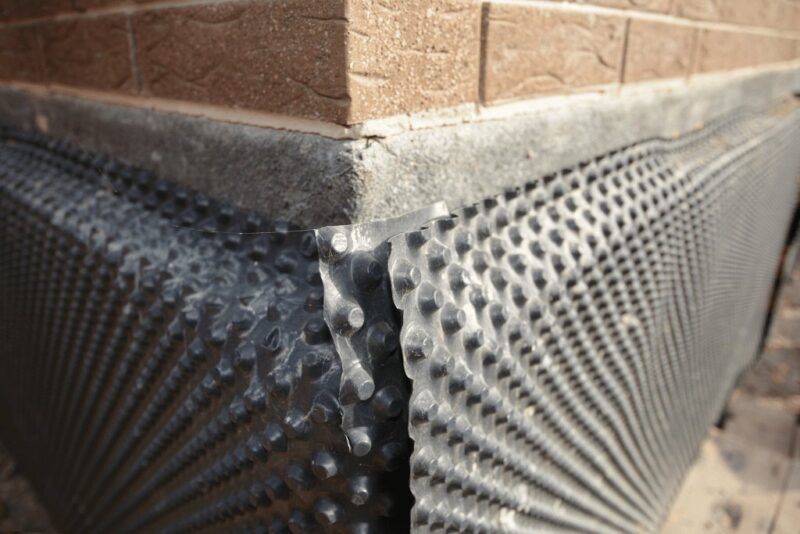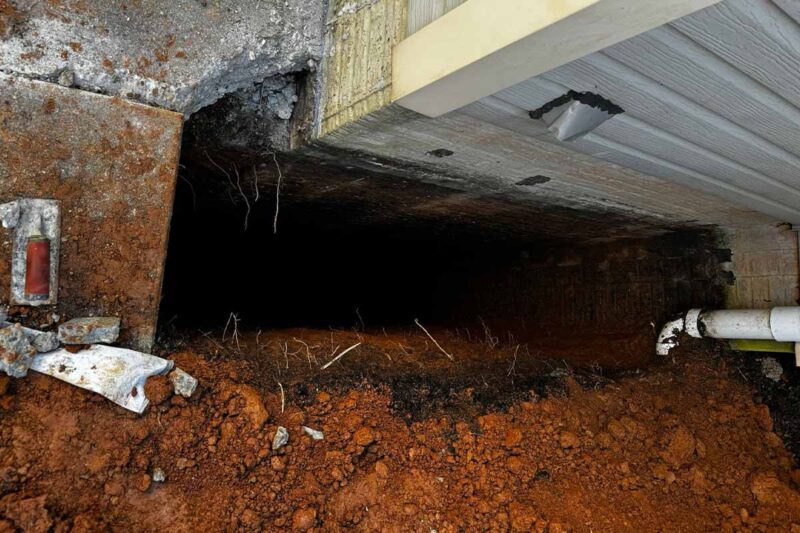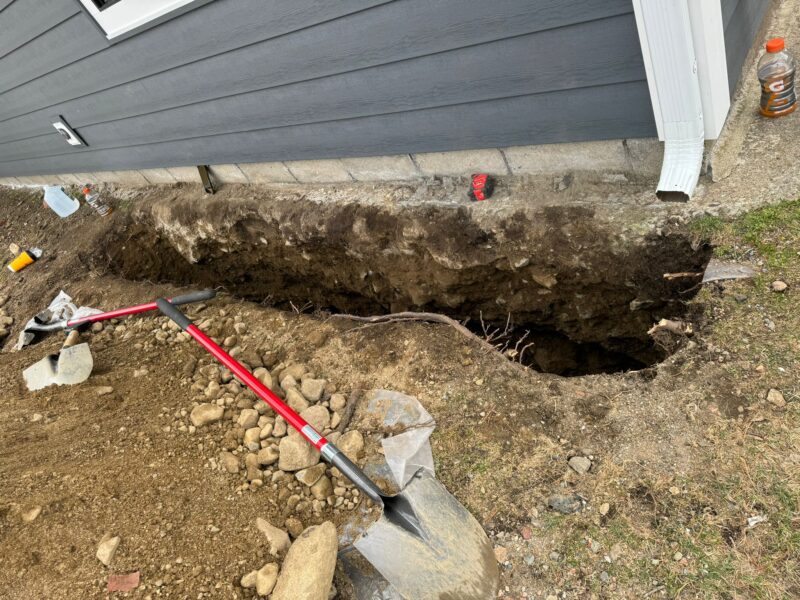
Foundation waterproofing stops water where it starts: on the outside face of the wall. Rather than managing moisture once it is already in the basement, we open the ground, put the masonry right and wrap it in a continuous barrier before backfilling.
Exterior Foundation Waterproofing in Toronto
This is excavation and masonry work, carried out from outside the house. It suits homes where the foundation wall itself has become the weak point, letting ground water soak through block, brick or poured concrete and into the rooms below.
If your problem is best tackled from inside, such as a drainage channel, a sump pit or a single leaking crack, have a look at our basement waterproofing page. Many homes need one approach or the other; some benefit from both.
Signs the Outside of Your Foundation Needs Attention
Moisture on the outer face of a foundation tends to announce itself indoors first. Look out for:
- A damp, musty smell in the basement that never quite clears
- Paint lifting or flaking off the lower walls
- White, powdery efflorescence on block or concrete
- Wet patches that appear after heavy rain or a spring thaw
- Parging at ground level that is cracked, hollow or falling away
- Water tracking in around the base of exterior steps
Any of these suggests the original damp-proofing coat has broken down and the wall is taking on water it was never meant to hold.
Why Foundations Leak After a Few Hard Winters
Freeze-thaw winters are tough on masonry below grade. Water finds its way into fine cracks and worn coatings, freezes, expands and widens the gap. The next thaw lets more water in, so a minor weakness grows season after season.
Heavy clay ground makes matters worse. Clay holds on to water instead of letting it drain, keeping the wall wet and building up hydrostatic pressure against it. That is why a basement that stayed dry for a long time can suddenly start to leak.
How We Waterproof a Foundation
Every wall is different, but a typical exterior job follows these stages:
- Dig along the affected side of the house down to the footing
- Clean the exposed wall so defects can be seen clearly
- Repair cracks, loose masonry and failed mortar
- Apply a fresh parge coat wherever the surface needs building back up
- Install a waterproofing or damp-proofing membrane over the prepared wall
- Backfill once the barrier is complete
If the weeping tile along the footing turns out to be crushed or clogged, the open trench is the ideal moment to deal with it. Sorting it now saves digging the same ground twice.
The goal is a solid wall behind an unbroken seal. Brushing tar over masonry that is still cracked or crumbling simply hides the fault until it leaks again.
When Waterproofing Is Not Enough
A membrane keeps water out, but it cannot hold up a wall that is sinking. If the foundation has dropped, cracked right through or leaned away from the house, the movement needs addressing first, often through foundation underpinning.
We will tell you honestly which comes first after looking at the wall, so the repair and the waterproofing happen in a sensible sequence.
Book an Assessment
To arrange a visit from Goldstar and talk through exterior waterproofing for your home in Toronto, call (437) 243 1908 and we will come out and look at the wall.