When a house starts to settle, surface repairs rarely last. Underpinning deals with the cause by strengthening the footing itself, or extending it down to ground that can carry the load properly.
Foundation Underpinning in Toronto
Sometimes called foundation reinforcement, underpinning is concrete and masonry work carried out beneath the existing footing. We work in planned, staggered sections, so most of the house is always resting on sound support while new concrete goes in underneath.
Signs Your Foundation May Be Moving
Settlement usually shows up gradually. Common warning signs include:
- Stair-step cracks running through brickwork
- A section of wall that has dropped or leaned outwards
- Floors that slope noticeably from one side to the other
- Doors and windows that start to jam for no obvious reason
- Gaps opening between the foundation and the ground or the wall above
A useful clue is repeat failure. If cracks reappear in the same spot after mortar work or repointing, the ground beneath is probably still shifting.
What Causes Footings to Settle
Many older homes sit on relatively shallow footings. On clay ground, those footings ride up and down with the soil, which shrinks through a dry summer and swells again when it gets wet.
Winter adds frost heave to the mix. Frozen ground can lift a wall that was never founded on stable soil, then let it drop again at the thaw.
After enough cycles, that movement appears as settlement, split masonry and joints that open up to let water in. Poor drainage around the house, such as downpipes discharging against the wall, can make the soil beneath a footing wetter and less stable still.
How Underpinning Is Carried Out
We begin with a site assessment and set out a scope based on what we find. We are masons, not structural engineers, so where a design or permit is required we work to that.
The process itself is methodical:
- Excavate a short section beneath the existing footing
- Pour concrete to deepen or strengthen the bearing at that point
- Allow it to take the load before opening the next section
- Continue in sequence until the full length is supported
Working in sections takes patience, but it is what keeps the structure safe. Rushing the sequence, or opening too much at once, would leave the house without support.
The same technique is often used when a basement floor is being lowered. Our part is the reinforcement of the foundation; finishing or converting the space afterwards is a separate job.
Sealing the Wall Once It Is Stable
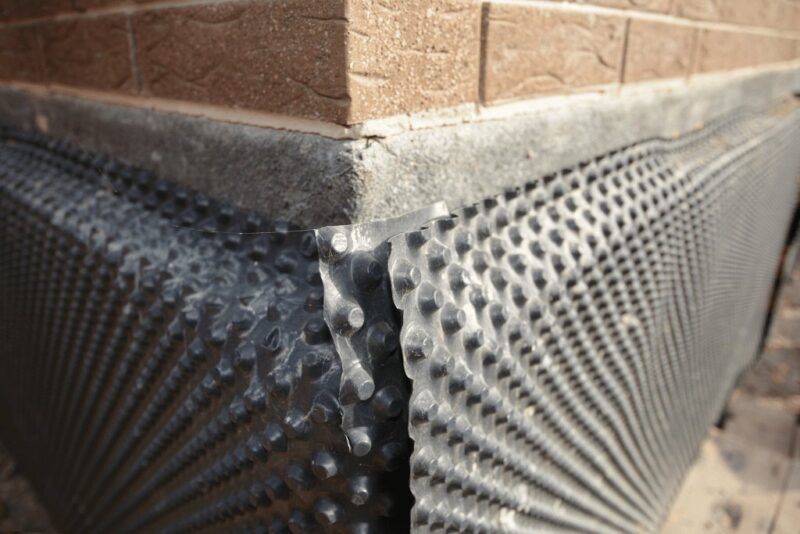
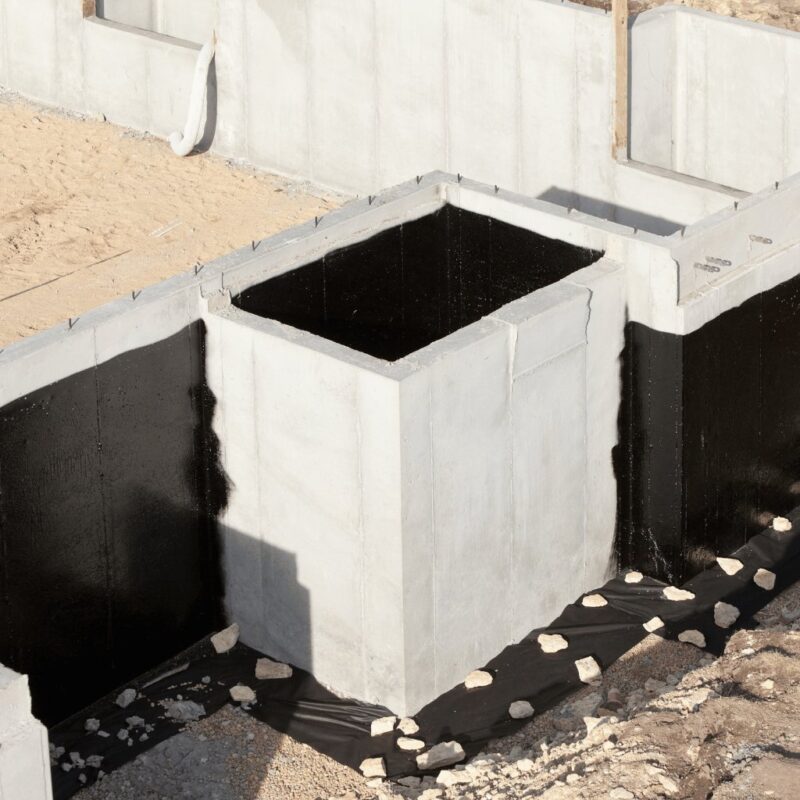
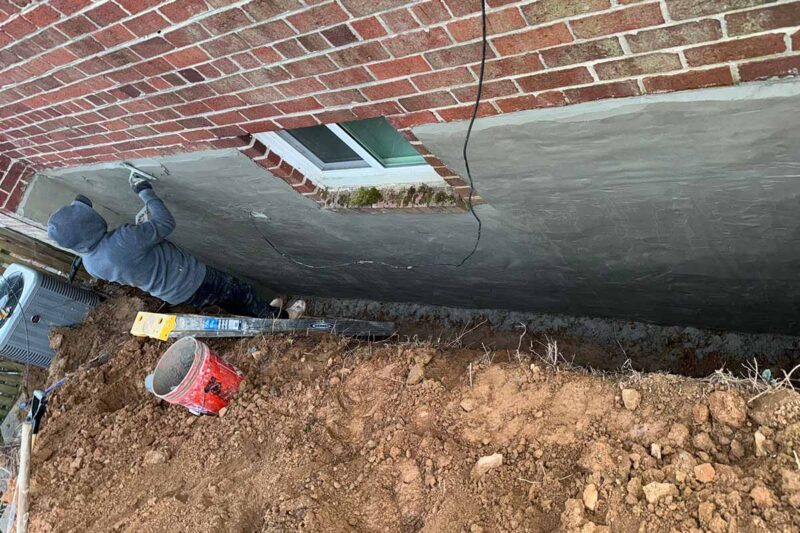
A strengthened footing still has to keep water out. Bare concrete sitting against wet clay will soon draw moisture through, so we often follow underpinning with exterior foundation waterproofing and a fresh parge coat while the ground is still open.
If damp has already reached the inside, our basement waterproofing service covers interior drainage, crack injection and moisture control to finish the job from within.
Arrange a Foundation Assessment
If you think your foundation is moving, Goldstar can come and look at it. Call (437) 243 1908 to book an underpinning assessment anywhere in Toronto.